
Low-Latency Order Routing with Chronicle FIX
April 8th, 2026
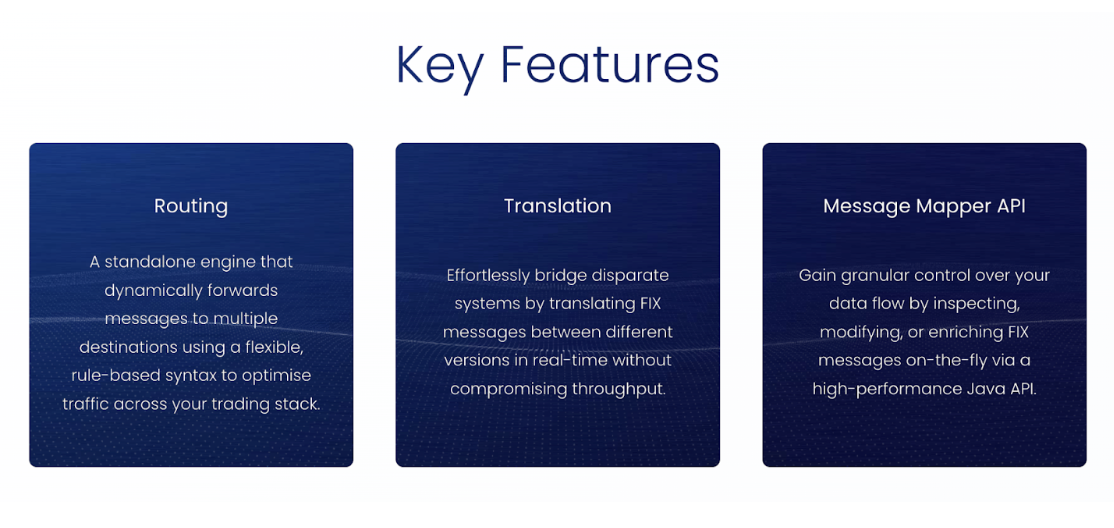
Eliminate bottlenecks by distributing high message volumes across a pool of FIX gateway servers. Use Chronicle FIX router’s natural rule syntax to forward messages based on standard or bespoke tags, ensuring optimal resource utilization and sub-microsecond traffic management.
The Chronicle FIX Router is a highly configurable, low-latency engine designed to bring ultimate operational flexibility to your distributed trading stack. It empowers infrastructure teams to intelligently route, translate, and manage complex FIX message flows without compromising on microsecond performance.
Intelligent, Rule-Based Routing
Chronicle FIX eliminates the need for hard-coded routing logic. It uses a natural, easily readable rule syntax to route messages to downstream clients, internal pricing engines, or risk systems based on specific FIX parameters, order symbols, or custom tags.
Rules can be configured and updated dynamically, allowing for highly specific load balancing and traffic management strategies.
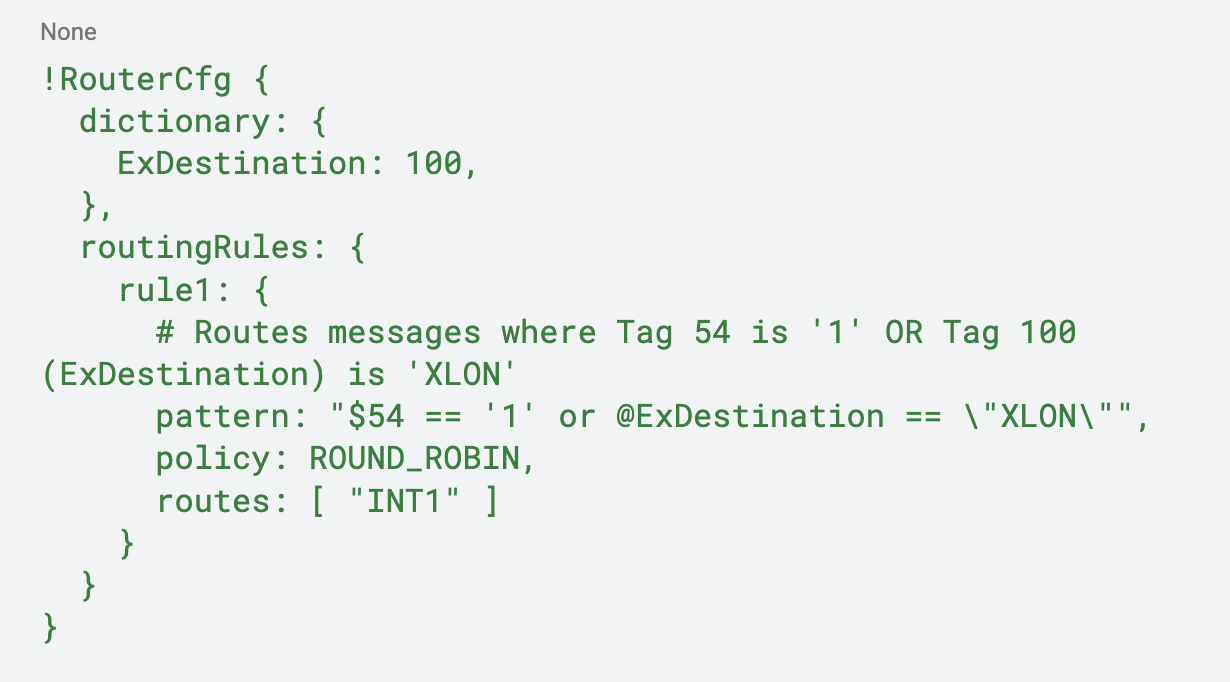
Example 1: Routing by Standard or Custom Tags In this configuration, messages are routed using standard tags (like Tag 54) or mapped dictionary fields (like ExDestination mapped to Tag 100).
YAML
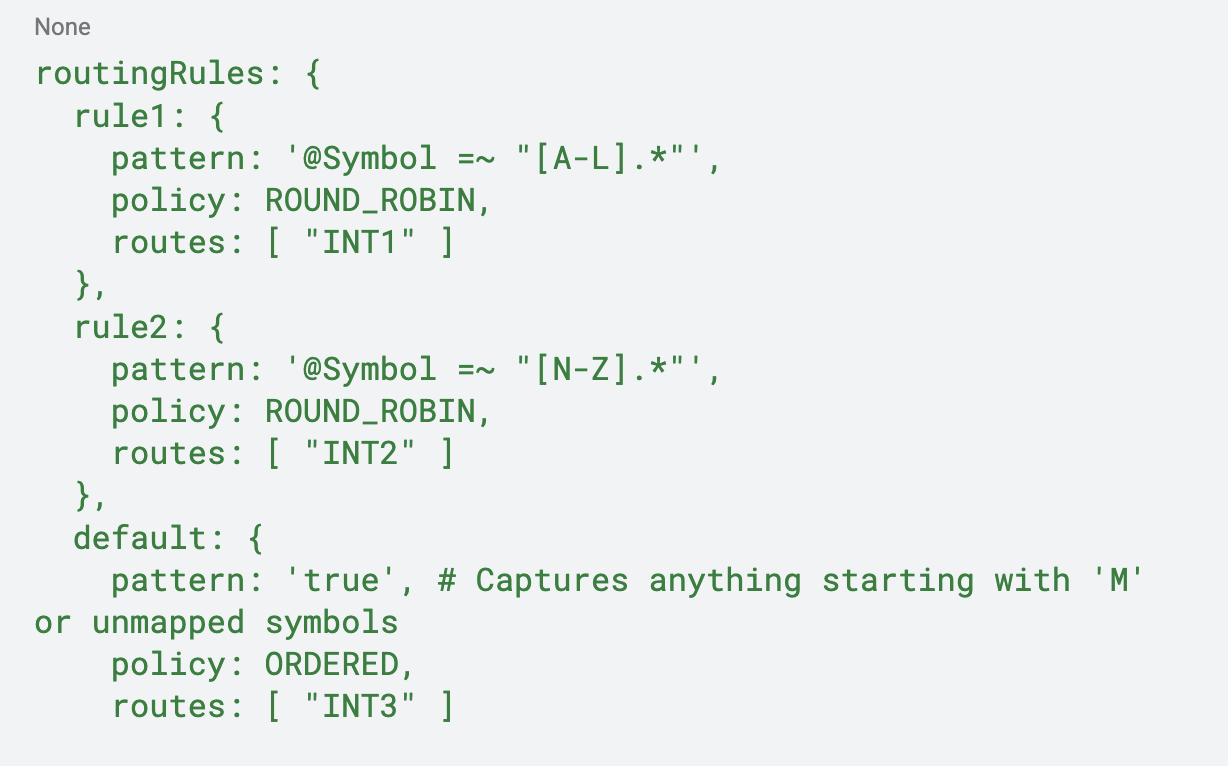
Example 2: Regex Routing by Order Symbol You can easily distribute load across multiple downstream FIX engines (INT1, INT2, INT3) using regex patterns applied to the Symbol field.
YAML
On-the-Fly Message Translation: The MessageMapper API
Traditional FIX engines treat routing as a simple point-A-to-point-B exercise. Chronicle FIX goes further. Our MessageMapper API gives you the ability to inspect, modify, and translate FIX messages in flight, acting as an invisible normalization layer between external clients and your internal systems.
Configurable on a per-session basis, the MessageMapper API allows you to execute sub-microsecond message manipulation:
Adding Fields: Automatically inject internal, vendor-specific tags to incoming client messages before they hit your internal execution engines, keeping your proprietary infrastructure hidden from the outside world.
Removing Fields: Strip unnecessary or problematic data (e.g., stripping out currency fields or redundant client identifiers) before routing to specific internal venues.
Mutating Fields: Intercept and normalize incoming data on the fly, such as instantly converting symbol fields to lowercase to match your internal database requirements.
Complex Data Handling: Seamlessly read, write, and manipulate complex repeating groups within the FIX message structure without breaking sequence or sacrificing latency.
The Result: A highly resilient, sub-microsecond routing hub that not only directs traffic but actively cleans and normalizes your enterprise data flow in real time. See how a large Canadian bank put this into practice in our case study "Transforming FX Infrastructure for a Major Canadian Bank".